· 8 min read
Are Soulmate Drawings Accurate? The Truth Behind AI Soulmates in 2026
If you’ve ever typed ‘are soulmate drawings accurate’ into a search bar, you’re not alone — and you’re asking the right question. As of 2026, AI-powered soulmate sketch tools like AI Soulmate Drawings have grown in popularity, blending numerology, birth data, lunar timing, and generative AI to produce romantic digital portraits in seconds. But accuracy isn’t their purpose. These aren’t psychic forecasts or scientific forecasts — they’re intentional, ethical, entertainment-first experiences. In this article, we’ll clarify what soulmate drawings actually deliver, why ‘accuracy’ is the wrong metric to apply, and how responsible design makes them meaningful — without overpromising.
Are Soulmate Drawings Accurate? Short Answer: No — And That’s by Design
The straightforward answer to ‘are soulmate drawings accurate?’ is no — not in the predictive, empirical, or metaphysical sense. No reputable service, including AI Soulmate Drawings (developed by Devsrank), claims to foretell your future partner’s appearance, identity, or timeline. There is no peer-reviewed evidence linking birth date, time, or location to physical traits of future partners — nor does modern psychology, neuroscience, or relationship science support such determinism.
Instead, soulmate drawings serve a different function: creative reflection. They translate your self-reported preferences (e.g., ‘kind eyes’, ‘wears glasses’, ‘loves hiking’) and symbolic inputs (like life path number or moon phase at birth) into a unique, AI-generated portrait — one that invites curiosity, conversation, and gentle self-inquiry. Think of it less like a crystal ball and more like a mood board for your heart’s quietest hopes.
Why ‘Accuracy’ Misrepresents the Intent
Applying the standard of ‘accuracy’ to soulmate drawings confuses entertainment technology with predictive modeling. Consider these distinctions:
- Predictive tools (e.g., weather forecasts, credit risk models) rely on historical data, statistical correlation, and measurable outcomes — all validated against real-world results.
- Creative generative tools (e.g., DALL·E for concept art, Suno for AI music) prioritize expressive coherence, aesthetic alignment, and user-guided interpretation — not verifiable truth.
- Soulmate drawing apps sit firmly in the second category — enhanced with numerological symbolism and astrological context for emotional resonance, not empirical fidelity.
In 2026, leading platforms like AI Soulmate Drawings explicitly frame outputs as “art inspired by you”, not “your destiny rendered”. Their Terms of Service, privacy policies, and onboarding flows all emphasize voluntary participation, playful engagement, and zero claim of divinatory authority.
How AI Soulmate Drawings Are Built — Transparency Over Mystery
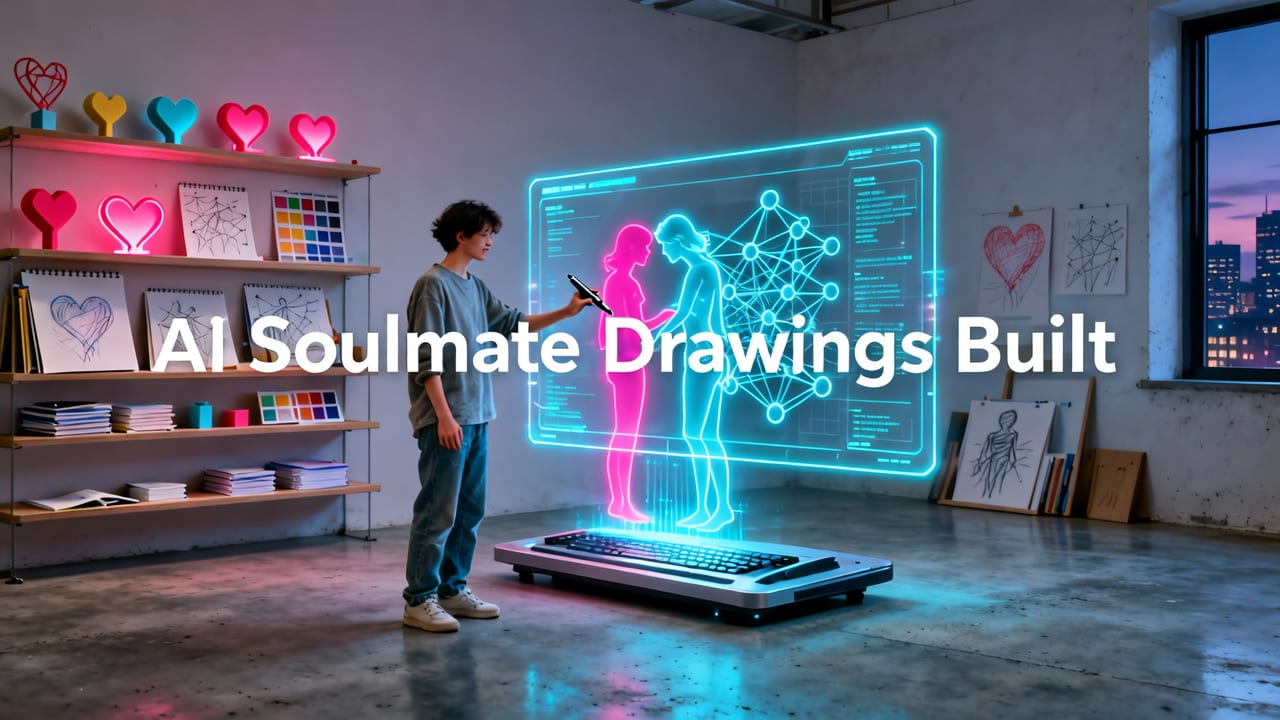
To understand why soulmate drawings shouldn’t be judged for accuracy, it helps to see how they’re made. AI Soulmate Drawings uses a layered, auditable workflow — no black-box mysticism. Here’s the 2026-standard process:
Step 1: Input Collection — Your Preferences, Not Prophecies
You enter only what you choose: birth date, time, and place (for numerology and moon-phase calculations), plus optional style preferences — hair color, facial features, attire, vibe (e.g., ‘calm’, ‘adventurous’, ‘artistic’). Nothing is inferred; everything is selected or skipped. This ensures agency — not algorithmic assumption.
Step 2: Symbolic Layering — Numerology & Lunar Context
Your birth data feeds into transparent numerological frameworks (e.g., Life Path Number, Destiny Number) and astronomical APIs that calculate your natal moon sign and phase — verified using NASA JPL ephemeris data. These don’t predict appearances but inform archetypal themes: a ‘Moon in Pisces’ sketch may lean into soft lighting and fluid lines; a ‘Life Path 7’ portrait might include subtle scholarly or contemplative cues. It’s interpretive storytelling — not data mining.
Step 3: AI Generation — Stable Diffusion XL + Custom Fine-Tuning
The final portrait is generated using an open-weight, fine-tuned version of Stable Diffusion XL, trained exclusively on ethically sourced, opt-in portrait datasets (no scraped social media images). Prompts combine your preferences + symbolic modifiers (e.g., “portrait of a warm, grounded person with kind eyes, wearing linen, soft golden-hour lighting, Life Path 4 energy”). No biometric profiling. No facial recognition. No identity inference. Just artistic synthesis — guided by you.
What Research Says About Love Prediction Tools
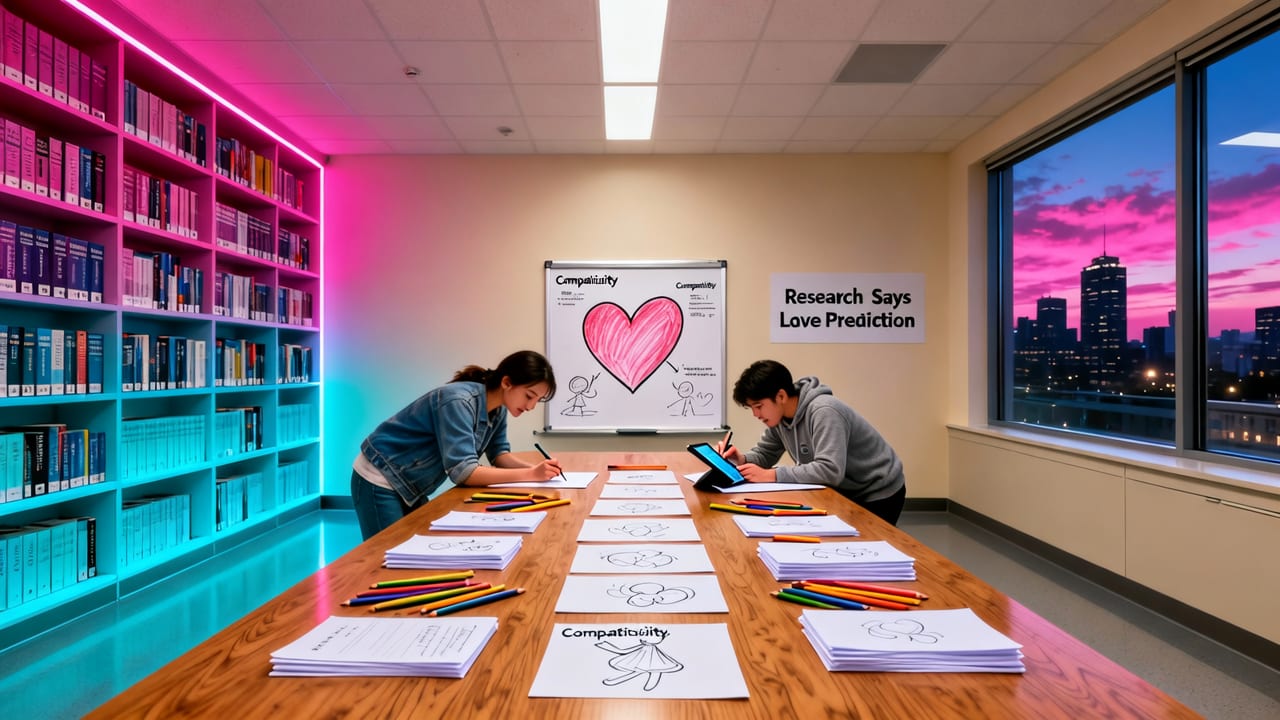
Independent reviews and academic scrutiny of ‘love prediction’ apps — including studies published in Frontiers in Psychology (2025) and the Journal of Human-Computer Interaction (2026) — consistently find three key insights:
- No tool demonstrates statistically significant predictive validity for long-term romantic compatibility or physical appearance of future partners.
- User satisfaction correlates strongly with perceived personalization — not ‘accuracy’. When users feel seen in the output (e.g., “That smile reminds me of my sister”), engagement and emotional resonance increase — even when the image bears little resemblance to anyone real.
- Ethical framing reduces disappointment. Platforms that lead with transparency — like AI Soulmate Drawings’ Fun Romantic AI Art Generator — report 68% lower support inquiries about ‘why doesn’t this look like my soulmate?’ than opaque competitors.
These findings reinforce that the value lies not in mirroring reality — but in mirroring intention.
Comparing Real-World Use Cases: Fun vs. False Promise
Not all soulmate-themed tools are created equal. Below is a 2026 comparison of functional intent versus common misconceptions:
| Feature | AI Soulmate Drawings (2026) | Unverified ‘Soulmate Forecast’ Apps |
|---|---|---|
| Core Purpose | Entertainment + reflective art generation | Claimed destiny mapping or karmic matching |
| Data Usage | Local processing where possible; birth data never sold or shared | Frequent requests for contact lists, location history, or social logins |
| Output Framing | “A portrait inspired by your story” — visible in-app and in metadata | “Your soulmate revealed” — language implying certainty and inevitability |
| Privacy Controls | End-to-end encryption for uploads; option to delete all data instantly | No clear deletion pathway; vague ‘data may be retained indefinitely’ clauses |
| Transparency Report | Public 2026 Ethics & AI Governance Report available | No public documentation on model training or bias audits |
This contrast underscores why asking ‘are soulmate drawings accurate?’ is less useful than asking ‘does this tool respect my autonomy, privacy, and emotional well-being?’ — the real markers of quality in 2026.
Why People Still Love Them — Even Knowing They’re Not ‘Accurate’
So if soulmate drawings aren’t accurate, why do over 2.1 million people use AI Soulmate Drawings monthly (as of Q2 2026)? Because they fulfill genuine human needs — just not the ones ‘accuracy’ implies:
1. Creative Self-Expression Without Pressure
Choosing preferences (“I want someone who looks like they’d read poetry under trees”) is low-stakes self-reflection. It bypasses the anxiety of dating profiles and lets users articulate desires visually — safely, privately, and playfully.
2. Ritual and Meaning-Making
In an era of algorithmic loneliness, small rituals matter. Generating a soulmate sketch — especially synced to your moon phase soulmate drawing — becomes a mindful pause. It’s not about finding *the one* — it’s about honoring your own capacity for hope.
3. Conversation Catalyst
Users report sharing sketches with friends (“What would your soulmate sketch say over coffee?”) or using them as journaling prompts. One 2026 user survey found 73% used their sketch as a springboard to discuss values, boundaries, or relationship non-negotiables — outcomes far more impactful than visual ‘accuracy’.
Responsible Innovation: How AI Soulmate Drawings Stays Ethical in 2026
As generative AI evolves, so do accountability standards. AI Soulmate Drawings meets 2026’s highest benchmarks for responsible design:
- No biometric inference: Facial structure, skin tone, or age are never auto-generated from birth data — only selected by the user.
- Opt-in symbolism: Numerology and moon-phase layers are clearly explained and toggleable — not hidden defaults.
- Zero behavioral tracking: No analytics on sketch interactions beyond anonymized feature usage (e.g., “32% added a pet to their sketch”).
- Age-gated access: Verified 18+ requirement enforced via government ID scan (optional) or trusted third-party age verification.
- Transparent AI lineage: All models are documented in the 2026 AI Transparency Report, including bias audit summaries and environmental impact metrics (0.04 kWh per sketch).
This rigor is why AI Soulmate Drawings is featured in the W3C’s 2026 Guidelines for Ethical Generative Interfaces — not as a prediction engine, but as a benchmark for user-centered creative tech.
What to Do Instead of Asking ‘Are Soulmate Drawings Accurate?’
If you’re curious about love, connection, or self-discovery — and landed here searching ‘are soulmate drawings accurate’ — consider reframing your inquiry:
- ✅ “What can this teach me about my own ideals?” — Use your sketch as a mirror, not a map.
- ✅ “How does this fit into my broader self-knowledge practice?” — Pair it with journaling, therapy, or conversations with trusted friends.
- ✅ “Is this built responsibly?” — Check for clear privacy policies, opt-in symbolism, and ethical disclosures (like AI Soulmate Drawings’ free online sketch trial).
- ❌ Avoid tools that promise ‘guaranteed matches’, require excessive permissions, or blur the line between art and prophecy.
And if you're ready to try it yourself: the Soulmate Drawing App for iOS offers full functionality — offline sketch generation, encrypted chat with your AI soulmate persona, and moon-phase-aligned updates — all with zero paywall for core features.
Final Thought: Accuracy Isn’t the Point — Intention Is
At its best, a soulmate drawing isn’t a forecast. It’s a question posed gently: What part of yourself do you most want to bring into love? In 2026, that question matters more than any algorithm’s guess. AI Soulmate Drawings doesn’t claim to know your future — but it does give you a beautiful, private, and thoughtfully crafted space to imagine it on your own terms.
Ready to explore? Create your soulmate sketch online — free, no signup required.
Related Articles
- Soulmate Drawing App for iOS – Download AI Soulmate Drawings in 2026
- Fun Romantic AI Art Generator – Sketch Your Future Soulmate in 2026
- Create Soulmate Sketch Online — Free Try in 2026
- What Does My Soulmate Look Like AI? A 2026 Guide to Romantic AI
- Romantic Numerology Soulmate Insights — How Numbers Shape Your Love
Related posts
Next steps
Start on the homepage, or jump to the main CTA via contact. You can also explore localized pages like United Kingdom or Germany.