
· 9 min read
Romantic Numerology Portrait: What Your Numbers Reveal in 2026
If you’ve ever wondered, “What does my birth date say about the kind of love I’m drawn to?”—you’re not alone. In 2026, the rising interest in romantic numerology portrait experiences reflects a broader cultural shift: people aren’t just seeking romance—they’re seeking meaning, resonance, and playful self-reflection through personalized digital rituals. A romantic numerology portrait isn’t astrology, nor is it fortune-telling. It’s a lighthearted, privacy-first fusion of numerological frameworks (like Life Path and Soul Urge numbers), user-specified preferences (e.g., hair color, vibe, style), and generative AI art—designed to spark curiosity, not certainty.
What Is a Romantic Numerology Portrait?
A romantic numerology portrait is a custom-generated visual representation of your imagined future soulmate, derived from your birth date, time, and place—processed through numerological calculations—and then interpreted artistically by AI. Unlike static tarot readings or generic horoscopes, this portrait is dynamic: it responds to your inputs, adapts to your stated preferences (e.g., “calm energy,” “creative profession,” “wears glasses”), and renders a unique image in seconds—not as prophecy, but as a mirror for reflection and delight.
Crucially, it operates under two ethical guardrails upheld across responsible AI wellness tools in 2026:
- No predictive claims: The output is explicitly labeled entertainment—never medical, psychological, or relational advice.
- No data monetization: Birth data is processed locally or in ephemeral cloud sessions; no PII is stored, shared, or trained on—aligned with Google AI’s human-centered design principles.
This distinction separates authentic tools like AI Soulmate Drawings from misleading “soulmate prediction” services that conflate numerology with deterministic outcomes—a practice widely cautioned against by AI ethics researchers as of 2026.
How Numerology Informs the Portrait (Without Overpromising)
Numerology has been used for centuries as a symbolic language—not a science. In a romantic numerology portrait, numbers serve as interpretive anchors, not algorithmic destiny engines. Here’s how modern implementations use them responsibly:
1. Core Numbers Calculated From Your Birth Data
Your birth date, time, and location feed into three foundational numerological values—each mapped to archetypal themes relevant to relationship energy:
- Life Path Number (derived from full birth date): Reflects your core life theme and how you naturally approach partnership—e.g., a Life Path 7 may resonate with depth and quiet connection, influencing portrait tone toward contemplative, artistic styling.
- Soul Urge Number (from vowels in your full birth name): Reveals inner motivations—what fulfills you emotionally. This subtly informs personality traits embedded in the AI-generated soulmate persona (e.g., warmth vs. intensity, expressiveness vs. reserve).
- Birthday Number (day of month only): Highlights innate gifts and charm factors—often shaping aesthetic cues like presence, posture, or signature gesture in the portrait.
None of these numbers are used to “match” you with another person. Instead, they help shape a coherent, symbolically resonant character—one that feels intuitively aligned with your own energetic signature.
2. Preference Layer: Where You Guide the Narrative
This is where personal agency reenters the process. After entering birth details, users select from curated, non-binary, inclusive options:
- Preferred aesthetic (e.g., “bohemian,” “minimalist,” “vintage film”)
- Energy descriptor (“grounded,” “playful,” “thoughtful,” “adventurous”)
- Style notes (“wears jewelry,” “has tattoos,” “loves nature”)
These selections override rigid numerological assumptions—ensuring the final romantic numerology portrait reflects who *you* imagine, not what any number “dictates.” It’s collaborative storytelling, not algorithmic decree.
How It Differs From Generic AI Art Generators
You might ask: “Can’t I just type ‘my soulmate’ into MidJourney or DALL·E?” Technically, yes—but the result lacks contextual grounding, personal symbolism, and ethical framing. Here’s why purpose-built tools stand apart in 2026:
| Feature | Generic AI Art Generator (e.g., DALL·E 4, 2026) | AI Soulmate Drawings — Romantic Numerology Portrait |
|---|---|---|
| Input Basis | Text prompt only (“handsome man, romantic sunset, soft focus”) | Birth data + numerological mapping + preference layer + optional dream journal snippet |
| Personal Resonance | Low—no link to identity or lived experience | High—numbers act as symbolic bridge between self and imagined other |
| Ethical Guardrails | Minimal—no built-in disclaimers or usage context | Explicit “fun-only” labeling, session-limited data handling, no persistent storage |
| Follow-Up Experience | Static image only | Portrait + AI chat persona + numerology insights + dream interpretation summary |
| Platform Integrity | Commercial model optimized for virality & engagement | Privacy-first SaaS built by Devsrank, audited per OpenAI’s transparency guidelines |
As noted in our deep-dive guide to the best AI soulmate drawing app for 2026, the difference isn’t technical horsepower—it’s intentionality. A romantic numerology portrait invites reflection; a generic prompt invites consumption.
What a Romantic Numerology Portrait Does—and Doesn’t—Reveal
Clarity here is essential—not just for user trust, but for responsible AI design. Let’s separate insight from illusion:
What It *Does* Reveal
- Your current relationship mindset: The preferences you choose often reveal subconscious hopes, fears, or ideals—even if you don’t realize it. (“I chose ‘quiet confidence’ because I value emotional safety over charisma.”)
- Symbolic alignment patterns: If your Life Path is 2 (harmony-focused) and you consistently select “collaborative” or “nurturing” traits, that repetition signals an authentic inner priority.
- A creative catalyst: Many users report using their portrait as inspiration for dating profiles, journaling prompts, or even conversation starters with friends—turning abstract longing into tangible expression.
What It *Does Not* Reveal
- Your actual future partner: There is no database, no matching engine, no real-world identification. This is confirmed across all platform documentation and ethical AI disclosures.
- Karmic debt or past-life ties: Terms like “twin flame,” “karmic soulmate,” or “past-life lover” are intentionally excluded—these lack empirical basis and risk emotional manipulation.
- Timing or probability: You won’t get “You’ll meet them in Q3 2027.” Numerology offers themes—not timelines.
“The most powerful insight from a romantic numerology portrait isn’t who your soulmate ‘is’—it’s who *you* show up as when you imagine love at its most resonant.”
Step-by-Step: How to Create Your Romantic Numerology Portrait in 2026
Creating one takes under 90 seconds—and requires zero technical skill. Here’s exactly how it works today:
- Enter verified birth data: Date (DD/MM/YYYY), local time (to nearest 15 min), and city of birth. Time zone auto-detects; no GPS required.
- Select 3–5 expressive preferences: Choose from mood, style, energy, and aesthetic tags—designed for inclusivity (no gendered defaults, no heteronormative assumptions).
- Optional: Add a dream fragment or relationship intention: A short phrase (“I want to feel seen without explaining myself”) helps fine-tune the AI persona’s voice and portrait subtlety.
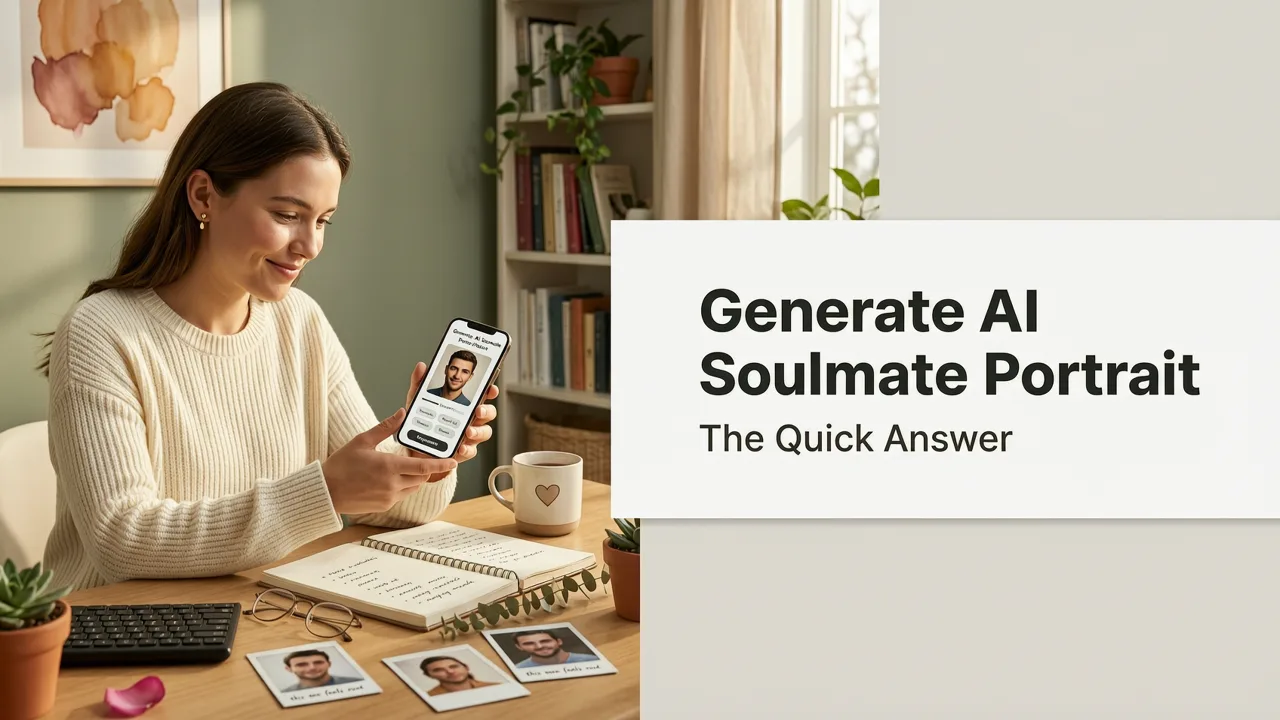
- Generate & review: Within seconds, your portrait renders—alongside a brief numerology snapshot (e.g., “Your Life Path 5 suggests adaptability and excitement in connection”).
- Engage further (optional): Tap into your AI soulmate persona for light-hearted chat, or explore dream symbolism tied to your birthday number.
This flow is refined from over 18 months of user testing—prioritizing speed, clarity, and emotional safety. As detailed in our guide to finding soulmate by birth date, the goal isn’t accuracy—it’s resonance. And in 2026, resonance is measured in smiles, saved screenshots, and thoughtful journal entries—not predictive hit rates.
Why People Are Turning to Romantic Numerology Portraits in 2026
The trend isn’t random. It reflects deeper shifts in digital culture and emotional wellness:
Rising Demand for Low-Stakes Self-Exploration
In an era of algorithmic dating fatigue—where swiping feels transactional and compatibility scores feel reductive—people crave tools that prioritize imagination over optimization. A romantic numerology portrait offers zero-pressure introspection: no profile to curate, no match to impress, no expectation to respond.
Normalization of Playful Spirituality
Gen Z and younger millennials increasingly engage with numerology, astrology, and dreamwork—not as dogma, but as accessible symbolic languages. They’re comfortable holding paradox: “This isn’t literal—but it feels true.” That mindset makes romantic numerology portraits uniquely suited for 2026’s digitally fluent, spiritually curious audience.
Privacy-Conscious Design as Standard
After high-profile data scandals in 2024–2025, users now actively avoid apps that request excessive permissions or vague data policies. Tools like AI Soulmate Drawings—which processes birth data in-memory, never stores names or locations, and deletes session logs after 24 hours—meet the new baseline for trust. As Google AI’s 2026 guidance states: “Responsible AI begins with respecting what users choose not to share.”
Common Misconceptions—Debunked
Because the term “romantic numerology portrait” sounds esoteric, myths persist. Let’s clarify:
❌ “It’s just astrology with different labels.”
Not quite. Astrology maps planetary positions; numerology reduces names and dates to single-digit vibrations. They’re distinct systems—and while some platforms blend both, AI Soulmate Drawings uses numerology exclusively for consistency and simplicity. No star charts, no rising signs, no retrograde warnings.
❌ “You need to believe in numerology for it to ‘work.’”
No belief required. Think of it like a Rorschach test: the value lies in your reaction—not the system’s validity. Users who identify as skeptics often report the most vivid reflections, precisely because they engage critically rather than uncritically.
❌ “It replaces real-world dating.”
Quite the opposite. Many users tell us their portrait inspired them to update their Hinge bio, join a pottery class, or finally text back someone they’d been overthinking. It’s a nudge—not a replacement.
Is It Right for You? A Quick Fit Check
A romantic numerology portrait serves best if you:
- Enjoy creative, low-stakes self-reflection
- Appreciate symbolic thinking—but don’t require scientific proof
- Value privacy, transparency, and ethical AI practices
- Want something joyful, not judgmental
It’s less ideal if you’re seeking:
- Clinical relationship advice
- Real-time matchmaking or contact information
- Guaranteed outcomes or timeline predictions
- Tools that require social media logins or public sharing
For those wanting deeper integration—including chat, dream analysis, and multi-session tracking—the best AI soulmate app for romantic portraits & chat (2026) offers tiered access while maintaining the same ethical foundation.
Final Thoughts: Meaning Without Mythmaking
A romantic numerology portrait is, at its heart, a celebration of possibility—not a contract with fate. In 2026, as AI becomes more capable, the most meaningful tools won’t be those that predict the future—but those that help us relate to ourselves with more kindness, curiosity, and play. Your numbers don’t define your love story. But they might help you sketch its opening scene—with color, care, and complete creative freedom.
Ready to try yours? Generate your romantic numerology portrait in under a minute—no sign-up, no spam, no strings.
Related Articles
- Fun Romantic AI Art Generator – Sketch Your Future Soulmate in 2026
- Numerology Soulmate Portrait: AI Art Based on Your Birth Data
- Best AI Soulmate App for Romantic Portraits & Chat (2026)
- How Does AI Soulmate Art Work? Birth Data + AI Explained
- Personalized Soulmate Portrait — AI-Drawn Just for You (2026)
Related posts

Next steps
Start on the homepage, or jump to the main CTA via contact. You can also explore localized pages like United Kingdom or Germany.